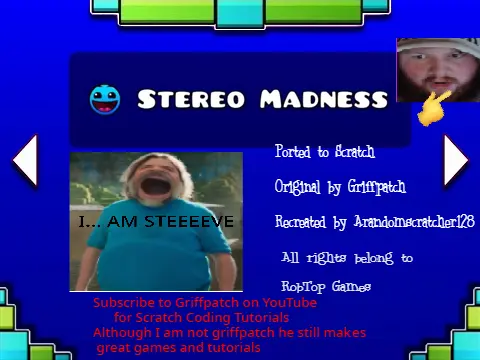
Compacted Geometry Dash Editor II represents a significant evolution in user-generated content creation for Geometry Dash enthusiasts. This enhanced version of the original Compacted Geometry Dash Editor delivers a fully remastered level editing experience, specifically targeting version 2.97 of the in-game editor. The core premise empowers players to design, build, and share their own custom Geometry Dash levels through an integrated online sharing system, fostering creativity within the community.
This iteration brings substantial visual and functional improvements. Key remastered elements include the Wave Portal, Ball Portal, and UFO Portal, all receiving updated graphics. The Invisible Block has been relocated under the Speed section for better organization. Visual clarity is enhanced with a larger 4x Speed icon, enlarged Arrows and X signs for improved visibility, a redesigned Stop Block, and refreshed graphics for most Orb types. These changes collectively aim to create a more authentic and polished editing environment.
Players control their character using the Up arrow key, W key, Spacebar, or mouse click to jump. Yellow rings also trigger jumps. Spikes must be avoided. In ship mode, holding the input ascends while releasing descends. Hitting a yellow jump pad grants a higher leap, and collecting coins provides bonus points. Pressing the L key toggles visual effects, which can help manage performance.
The dedicated editor mode is activated by pressing Z and M simultaneously. Within the editor, number keys 1 through 9 access different object categories:
For testing, pressing N enables noclip mode, allowing unrestricted movement through obstacles.
Advanced customization involves specific backend adjustments. To make Teleport Portals functional, users must locate the define check progress section and modify the Player Y variable coordinates (tiles 279, 281, 282) to match the portal's location. Adding background triggers requires inserting a Set mode [Mode] Background [Background] block within the same define check progress area where scroll X < 241. Similarly, defining the level's endpoint involves adjusting the max x value within that definition to the desired finish line coordinate.
This project serves as a comprehensive and accessible tool for aspiring level creators, combining core Geometry Dash mechanics with an expanded, user-friendly editing suite.